METRICS
PerDis 2026 • Poster

StatCounter

A longitudinal study exploring what happens when scholarly metrics leave the desktop and enter the flow of daily life.

Jonas Oppenlaender University of Oulu
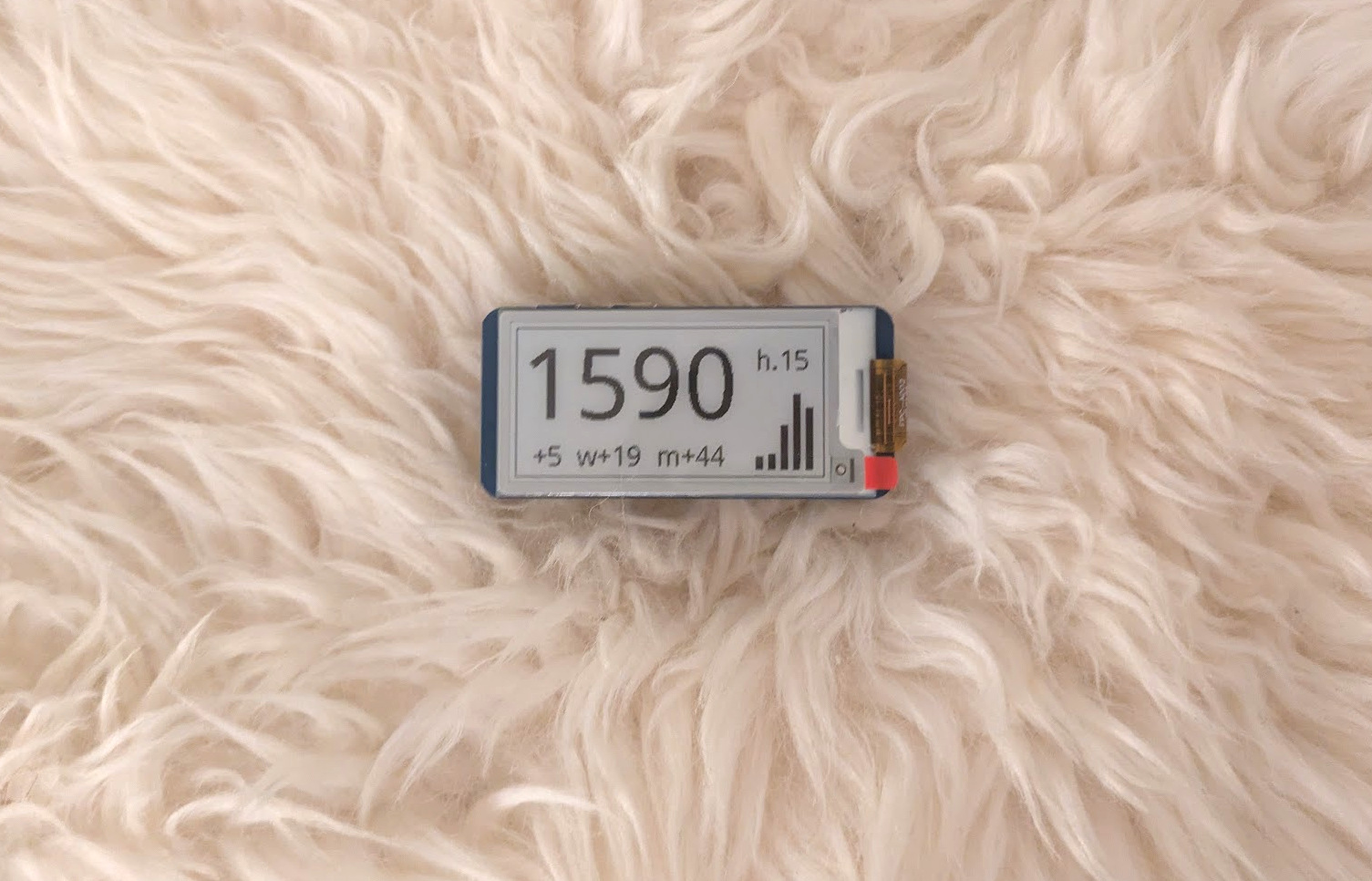
StatCounter Device

StatCounter, a portable scholarly metric display.
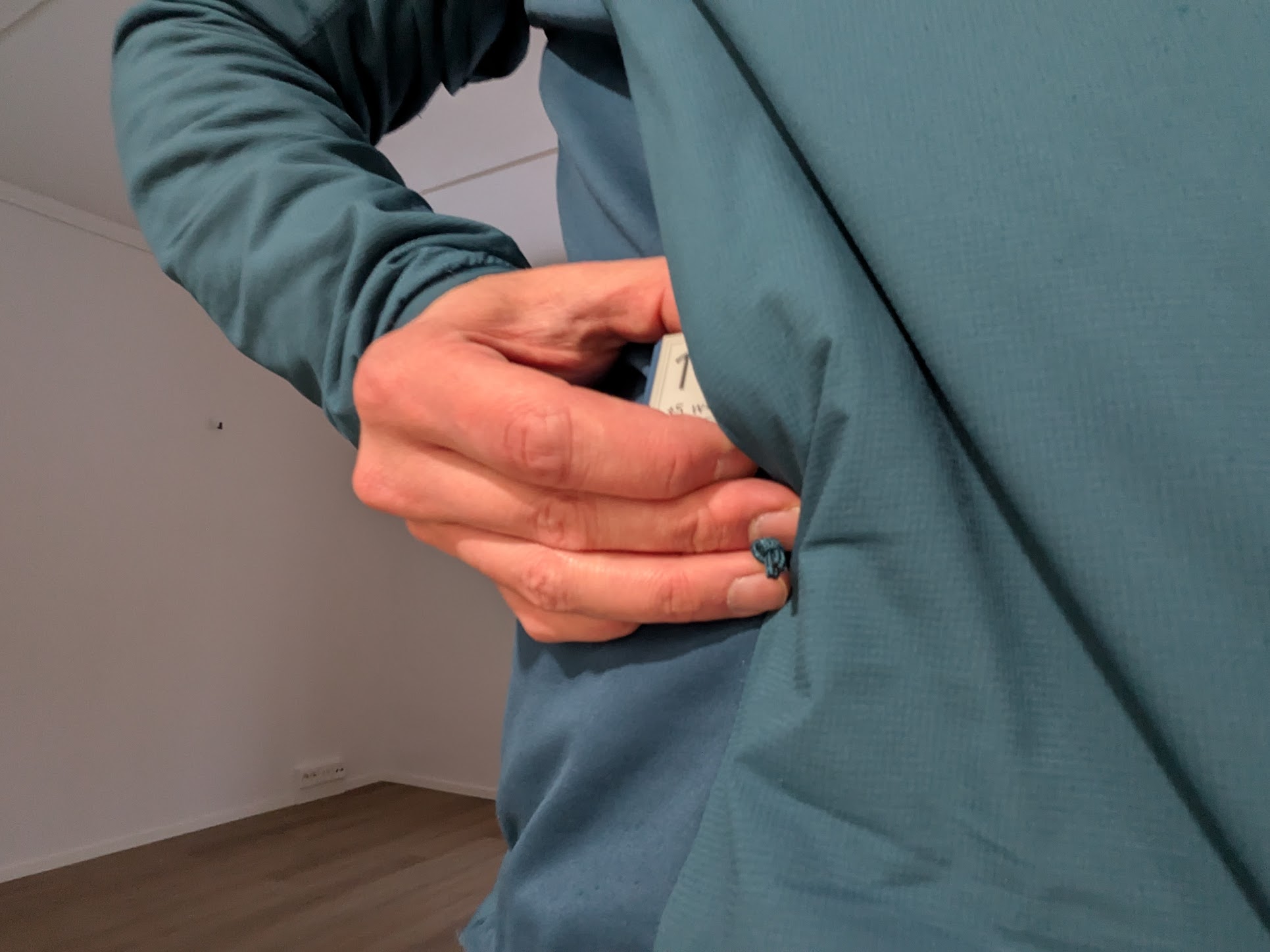
"What if your h-index lived in your pocket?"

Scholarly metrics usually reside in browser tabs, checked sporadically. This study changes the paradigm by introducing a handheld, battery-operated e-ink device—the StatCounter—that displays Google Scholar citation statistics in real-time.

Drawing on a longitudinal auto-ethnographic inquiry, we examined how constant, embodied access to these numbers influences motivation, attention, and academic identity. The device transforms data from a distant digital signal into a physical companion.

Hardware Profile

Raspberry Pi Pico 2 WH
Waveshare 2.13" E-Ink
MicroPython
2000mAh LiPo
StatCounter in hand
Fig 1. Embodied Metrics

Key Findings

How situated access reshapes the meaning of metrics.

01

Ambient Proximity

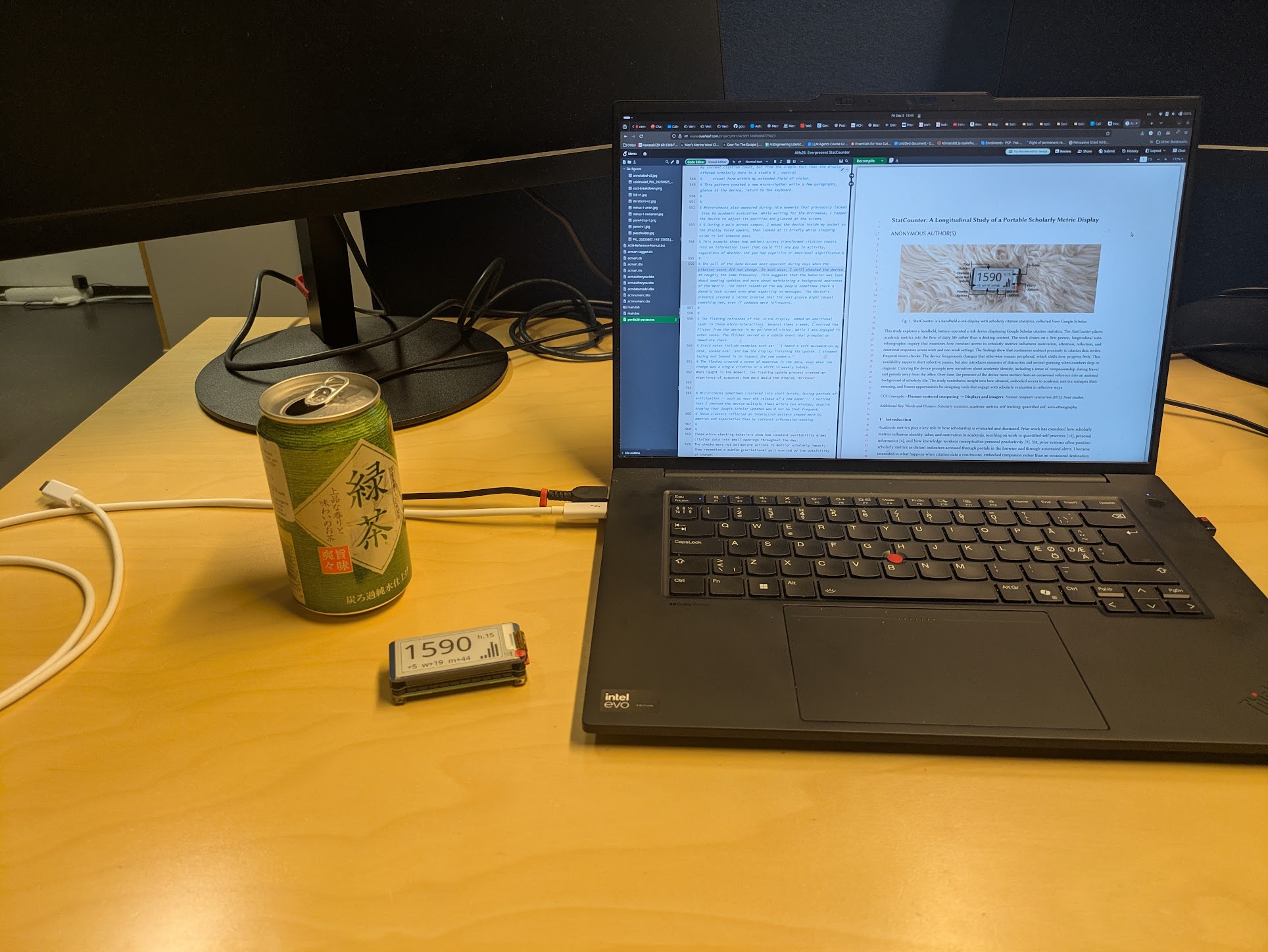
The pervasive availability of metrics invites frequent "micro-checks" and short reflective pauses. It turns the act of checking citations from a deliberate task into an almost subconscious habit.

Device on desk
02

A Sense of Companionship

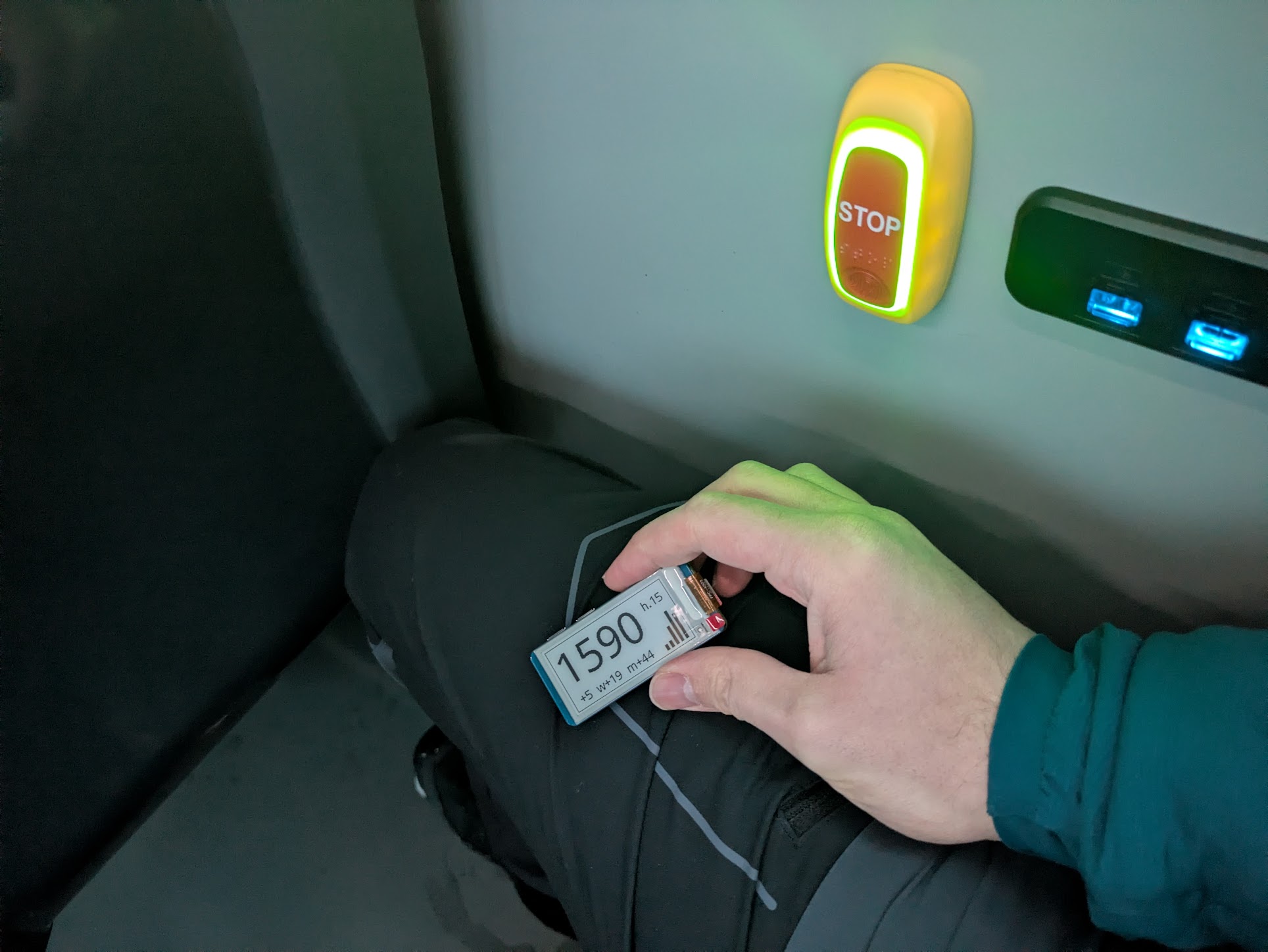
Carrying the device prompts new narratives about academic identity. It became a companion during travel and periods away from the office, bridging the gap between work and life.

Device in transit
03

The Social Object

The device sparked curiosity in colleagues and strangers alike, becoming a physical anchor for conversations about academic labor and evaluation.

04

The Emotional Rollercoaster

While increases brought moments of joy, the constant visibility also introduced moments of distraction and second-guessing when numbers dropped or stagnated. The device made the emotional volatility of metrics tangible.

Read the Paper

Accepted at the International Symposium on Pervasive Displays (PerDis) 2026.